
Jun 26, 2026Market Insights
The UK Adds Half a Million New Pets in Two Years as Ownership Reaches 62% of Households
New data shows the UK pet population has reached 36.5 million, with 62% of households owning at least one pet. Dogs and cats continue to lead growth, while market revenue increased to £4.3B in 2025.
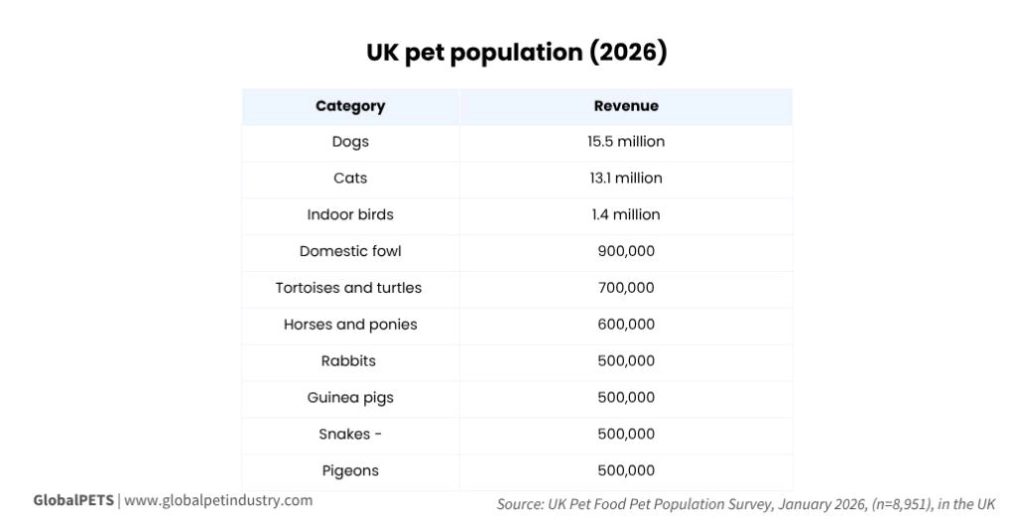
The UK pet population continues to expand, adding 500,000 new pets between 2024 and 2026. According to the latest UK Pet Food Pet Population Survey—based on 8,951 interviews conducted in January 2026—the country now has 36.5 million pets, living in 18 million households, representing 62% of all British homes.
This marks a 1.4% increase from the 36 million pets recorded in 2024 and reflects a long‑term upward trend driven primarily by dogs and cats.
1. Dogs and Cats Continue to Lead UK Pet Ownership
Dogs: The Fastest‑Growing Category
Dog ownership has risen sharply over the past five years:
- 2021: 12.5 million dogs
- 2024: 13.5 million
- 2026: 15.5 million
Household penetration increased from:
- 33% (2021) → 36% (2024) → 41% (2026)
This represents one of the most significant expansions in dog ownership in recent UK history.
Cats: Strong, Steady Growth
The UK cat population reached 13.1 million in 2026, up from 12.5 million in 2024.
Household penetration rose from 29% to 31%, reinforcing cats as the second most popular pet in the country.
2. Other Animals: Mixed Trends Across Species
Indoor Birds
- 2026: 1.4 million (2.7% of households)
- 2024: 1.5 million (3% of households) → Slight decline
Domestic Fowl
- 2026: ~900,000 (1.1% of households)
- 2024: 1.3 million (1.6% of households) → Significant decline
Tortoises & Turtles
- 2026: ~700,000 (1.6% of households) → Stable vs. 2024
Horses & Ponies
- 2026: ~600,000 (1% of households)
- 2024: ~700,000 (1.5% of households) → Noticeable decline
Other Pets
- Rabbits: ~500,000 (1.2%)
- Guinea pigs: ~500,000 (0.7%)
- Snakes: ~500,000 (0.8%)
- Pigeons: ~500,000 (0.7%)
These categories remain niche but stable.
3. A Historic Shift in UK Pet Ownership
Before the pandemic, pet ownership in the UK had been declining:
- 2011–12: 47% of households had pets
- 2019–20: 41%
Dogs were the only category that grew during this period.
Long‑Term Growth
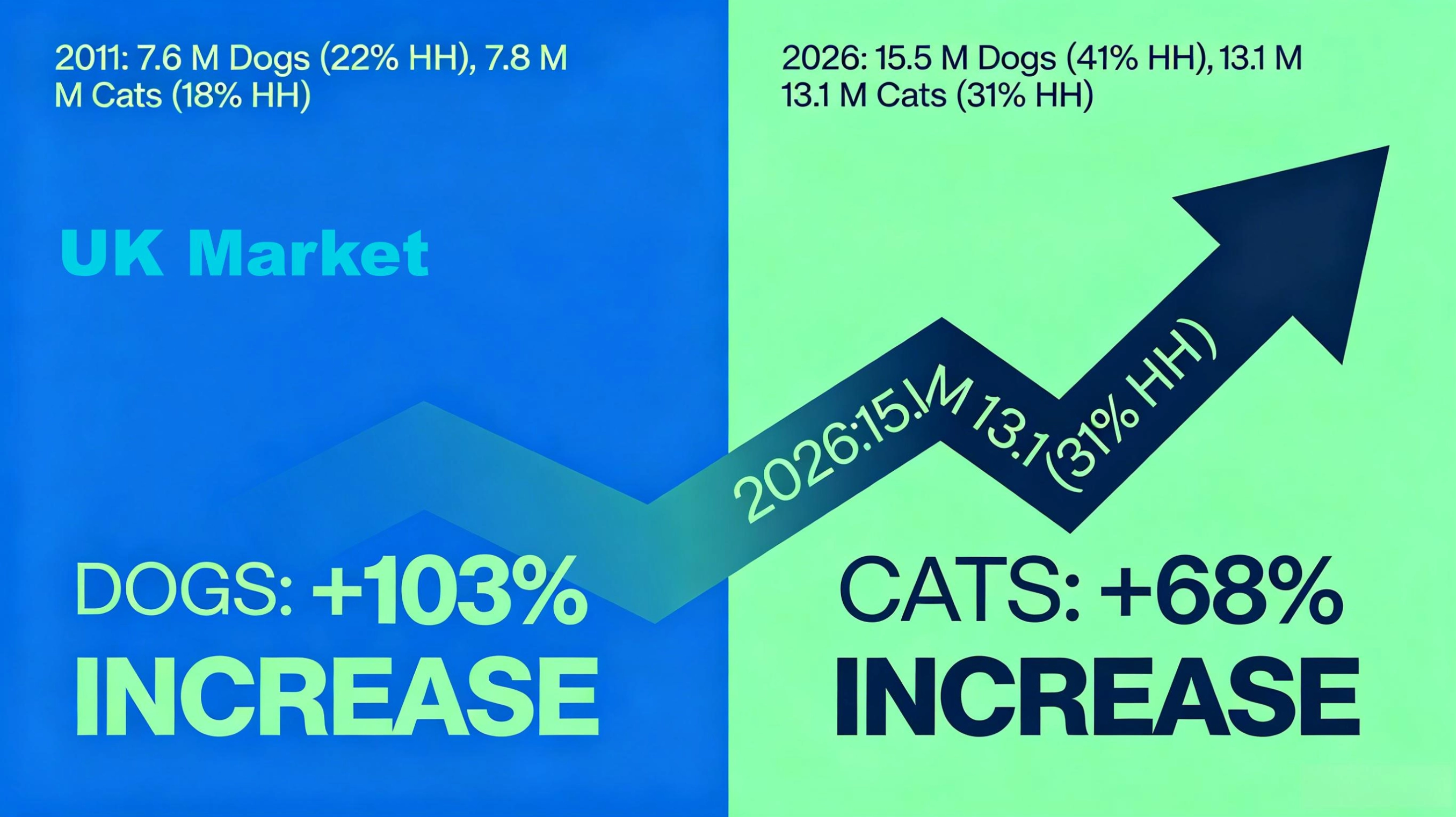
- Dog population increased 103% since 2011 (from 7.6M to 15.5M)
- Cat population increased 68% over 15 years (from 7.8M to 13.1M)
This long‑term rise reflects deeper lifestyle changes, including more single‑person households, remote work, and increased emotional reliance on pets.
4. Market Data: Revenue Continues to Rise
The UK pet market shows steady financial growth:
- 2024: £4.1B ($5.4B / €4.7B)
- 2025: £4.3B ($5.7B / €4.9B) → +4.9% YoY
Category Breakdown (2025)
- Dog food: 51.1%
- Cat food: 37.2%
- Outdoor birds: 7.9%
- Small mammals: 1.5%
- Fish: 1.5%
- Indoor birds: 0.4%
Dog and cat food dominate the market, reflecting their strong population growth.
What This Means for the Pet Industry
- The UK is becoming a high‑density pet market, with 62% of households owning pets.
- Dogs and cats will continue to drive the majority of spending.
- Declines in birds, fowl, and horses suggest a shift toward indoor, companion‑focused pets.
- Pet food remains the strongest revenue driver, especially dog food.
- Growth in household penetration indicates long‑term stability for the sector.
- Brands must prepare for higher expectations in nutrition, health, and functional accessories.
Source:GlobalPETS