Jun 26, 2026Market Insights
Spain’s Pet Parents in 2026: High Ownership, Stable Budgets, and Strong Loyalty to In‑Store Shopping
New 2026 data shows that 54% of Spanish households now have a pet, with dogs leading and mixed feeding becoming increasingly common.
New 2026 data from the Spanish Pet Industry Association (AEDPAC) reveals a pet‑loving nation defined by high ownership rates, controlled but steady spending, and a strong preference for physical retail. Dogs remain the dominant companion animal, while omnichannel habits and rising insurance adoption signal a more mature, structured pet market.
The findings are based on 713 online interviews conducted between 27 January and 9 February 2026.
1. Pet Ownership: Adoption Culture and Shifting Household Patterns
In 2026, 54% of Spanish households have at least one pet—an increase of 2 percentage points YoY.
Where Pets Come From
- 66% adopted from shelters or private individuals
- 10% taken in as strays
- 15.7% purchased from stores
Spain continues to be one of Europe’s strongest adoption‑driven markets.
Species Distribution
- Dogs appear in 3 out of 4 pet‑owning households
- Cats appear in just over half
Ownership patterns are evolving:
- Dog‑only households declined to 48.2%
- Cat‑only households remain stable at 24.5%
2. Feeding Habits: Dry Food Dominates, but Mixed Diets Grow
Dogs
- 55% rely exclusively on dry food
- 37% mix dry + wet
- 8% use wet food only
Cats
- 59.5% use mixed feeding
- 29% dry only
- 11.7% wet only
Spending on Food
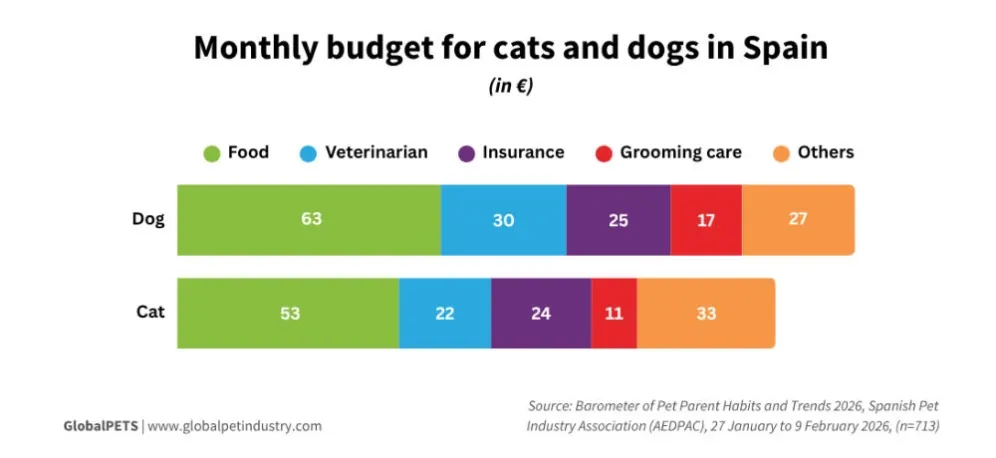
Pet food represents 38.8% of monthly pet spending:
- Dog owners: €63 ($68)
- Cat owners: €53 ($57)
Both groups reduced spending by €3 compared to 2025—a “controlled adjustment” without compromising care.
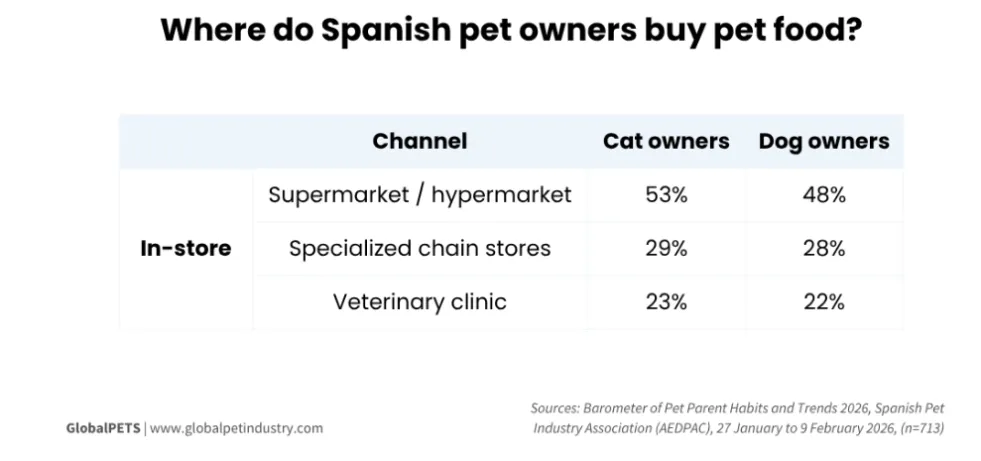
3. Offline Retail Remains the Preferred Channel
Spain stands out as one of Europe’s strongest in‑store pet food markets.
Dog Owners
- 86% buy mostly in‑store
- Supermarkets: 48%
- Specialized chains: 28%
- Veterinary clinics: 22%
Cat Owners
- 86.8% buy mostly in‑store
- Supermarkets: 53%
- Specialized chains: 22%
- Veterinary clinics: 23%
Physical retail remains dominant due to convenience, trust, and habit.
4. Online & Omnichannel: Small but Growing
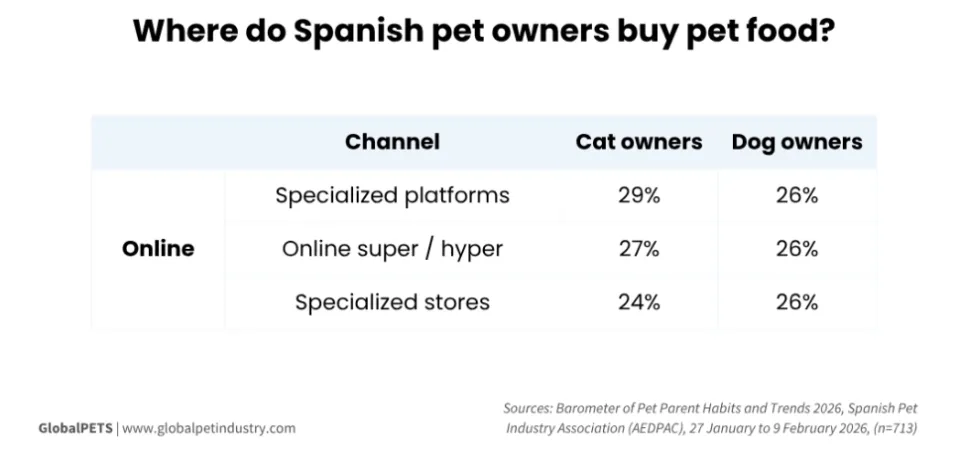
Online‑only purchasing remains extremely low:
- 1% of dog owners
- <1% of cat owners
Among those who do shop online, purchasing is evenly distributed across:
- Specialized platforms
- Online supermarkets/hypermarkets
- Specialist retailers
AEDPAC highlights that 9 in 10 pet parents now combine channels, confirming omnichannel as the new standard.
“Consumers compare, switch and choose based on convenience. The hybrid experience is no longer a trend – it is the new normal.”
5. Services: Health Leads, Grooming Follows, Daycare Lags
Veterinary Care
- Over 90% of dog and cat owners** report regular vet visits
Grooming
- ~70% of dogs receive grooming/washing services
- ~50% of cats receive grooming
Daycare & Boarding
Usage remains low:
- 68.5% of dog owners do not use daycare
- 73% of cat owners do not use daycare
Spain’s service market remains health‑centric rather than lifestyle‑centric.
6. Monthly Budget: Controlled Spending With Rising Insurance Adoption
Average Monthly Spending
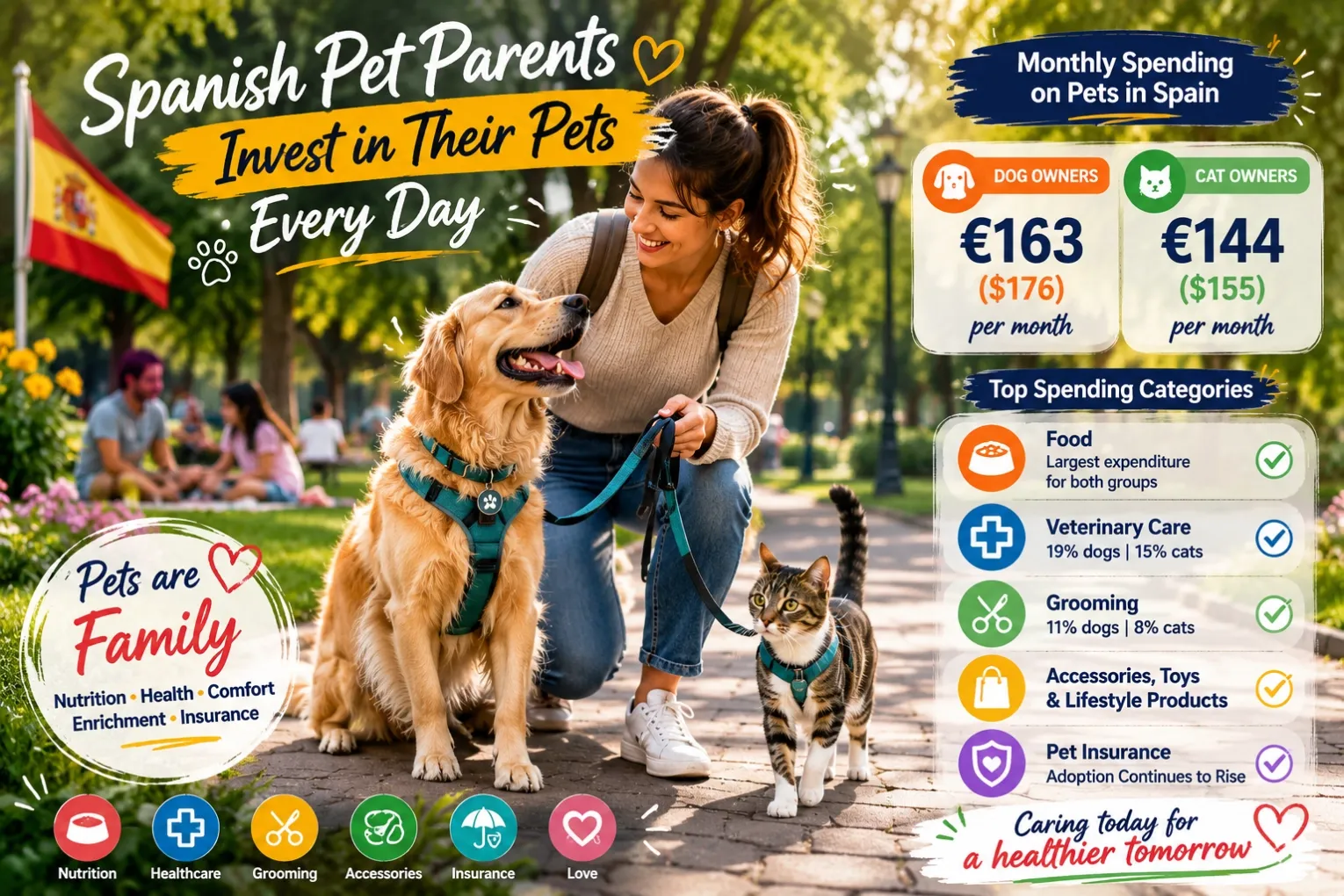
- Dogs: €163 ($176)
- Cats: €144 ($155)
Breakdown
- Food: largest share
- Veterinary care:
- Dogs: 19% (€30)
- Cats: 15% (€22)
- Grooming:
- Dogs: 11% (€17)
- Cats: 8% (€11)
- Other expenses (hygiene, toys, accessories, gifts):
- Dogs: €27
- Cats: €33
Insurance
Insurance adoption is rising:
- Dogs: €25/month
- Cats: €24/month
AEDPAC notes this reflects greater formalization and adaptation to new regulatory expectations.
What This Means for the Pet Industry
- Spain is a high‑ownership, adoption‑driven market
- Spending is stable but more rationalized
- Physical retail remains dominant, unlike many EU markets
- Omnichannel behavior is now standard
- Health services and insurance are becoming more important
- Mixed feeding is rising, especially for cats
The Spanish market is evolving toward structured care, stable budgets, and strong retail loyalty.
Source:GlobalPETS