Jul 17, 2026Market Insights
Latin American Pet Food Market Surpasses $8.82 Billion: Deep Insights into Regional Differences, Channel Opportunities, and Consumer Trends
LATAM is entering a “volume + value growth” window. Brands that tailor strategies by country and channel will win this region’s next decade.

The Latin American pet food market is experiencing structural growth characterized by a simultaneous rise in both volume and price. As pets gain greater emotional significance within the household, the rate of increase in consumer spending on pet food has outpaced that of staple foods, making it one of the most promising segments within the FMCG (Fast-Moving Consumer Goods) sector.
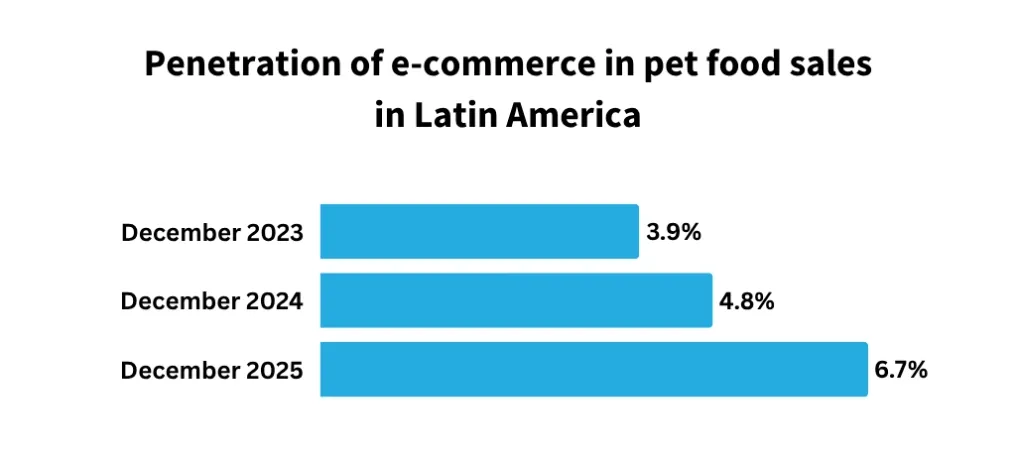
According to data from Worldpanel by Numerator, the growth rate of the pet food market share in Latin America reached 6% in 2025, surpassing the 4% growth seen in staple foods. Even more noteworthy is the "exponential" expansion of e-commerce channels: online sales surged from 82 million by the end of 2025—more than doubling in three years.
E-commerce penetration also rose from 3.9% to 6.7%. While the absolute figure remains modest, the online share of total pet food spending within the FMCG category grew from 1.3 billion, representing a 30% increase.
These figures demonstrate that:
The growth rate of the Latin American pet food market warrants serious attention from any brand.
I. Regional Differences: Latin America is Not a Single Market, but a Collection of Markets
1. Mexico: Largest Market by Volume, Yet Lagging Significantly in E-commerce
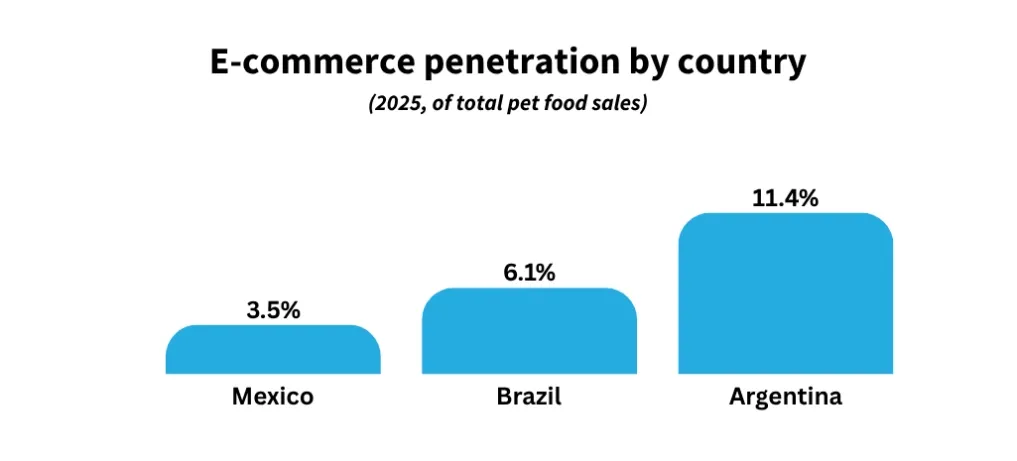
Surveys indicate that nine out of ten Mexican households purchase pet food, yet e-commerce penetration stands at only 3.5%—well below the Latin American average.
This characterizes Mexico as a market that is highly mature offline but largely untapped online.
Worldpanel expert Nacira Barraza notes:
"E-commerce penetration for pet food in Mexico remains severely underdeveloped, presenting immense growth potential."
For brands, the opportunity in Mexico lies not in educating consumers on whether to buy pet food, but on where to buy it. Once e-commerce infrastructure and consumer habits catch up, there is vast room for growth.
2. Brazil: The Second-Largest Market with High E-commerce Maturity
Brazil’s e-commerce penetration rate has reached 6.1%, driven primarily by:
- A growing number of households shifting from homemade to commercially manufactured pet food
- Active digital adoption by both the broader market and specialized pet stores
If you plan to enter Latin America, Brazil is the ideal market to serve as your primary e-commerce testing ground. Consumers are already accustomed to purchasing pet food online; your task is simply to win them over with your product.
3. Argentina: A Smaller Market, Yet an E-commerce Powerhouse
Argentina boasts a pet food e-commerce penetration rate of 11.4%—nearly double the Latin American average.
It is not just the pet food sector; Argentina’s e-commerce landscape is highly developed overall, with consumers showing exceptional openness to online shopping.
Argentina serves as an ideal "precision-focused" testing ground:
While the market is small, conversion rates are high, making it perfect for refining your e-commerce operational model before replicating it in larger markets.
4. Chile and Colombia: The "Next Brazil"—Markets Worthy of Early Positioning
E-commerce adoption is accelerating in both countries, making them excellent choices for medium-term strategic positioning.
II. Channel-Based Opportunities: A Tiered Strategy Based on E-commerce Maturity
The right approach to the Latin American market is not a "one-size-fits-all" strategy, but rather a tiered approach based on e-commerce maturity:
Argentina: A Priority Market for E-commerce Pilots
- Highest penetration rate
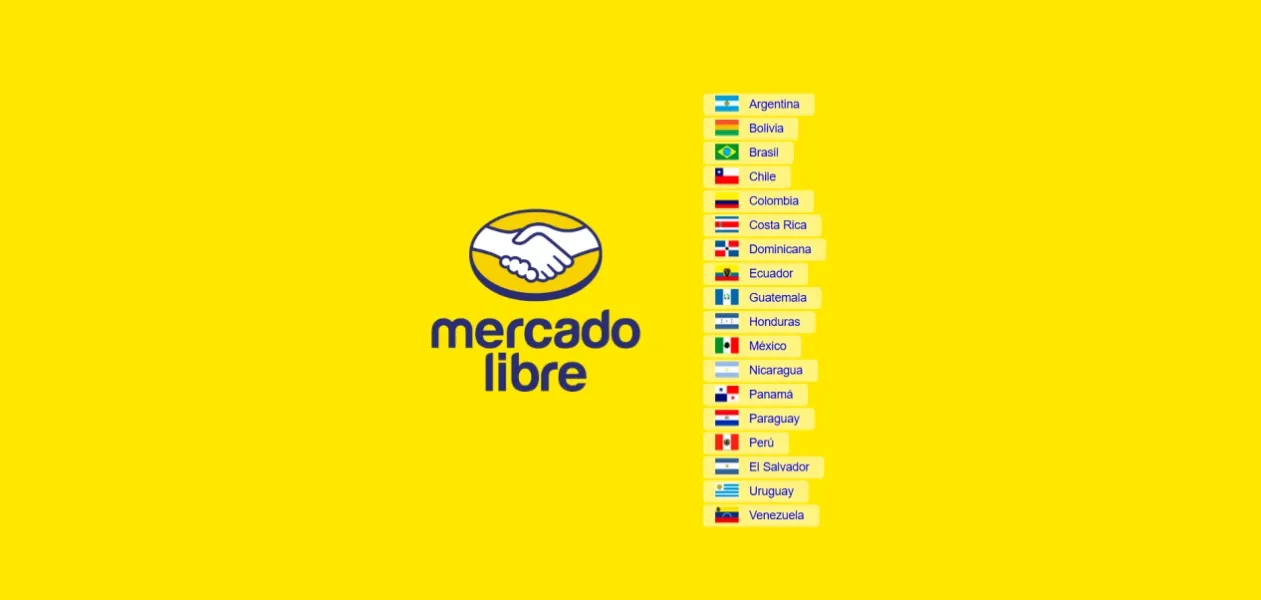
- Suitable for DTC models or product testing on Mercado Libre
- Low risk, rapid feedback
Brazil: Ideal for Scaling E-commerce Sales
- Mature infrastructure
- Established consumer habits
- Replicate the successful model from Argentina and scale up
Mexico: A Dual Online-Offline Strategy
- Highly mature offline retail
- E-commerce still in early stages
- Use online channels for brand exposure and product testing; use offline channels for market penetration
Chile & Colombia: Mid-term Strategic Markets
- Accelerating e-commerce adoption
- Suitable as future growth drivers
III. Consumption Trends: Aging Populations and Low Birth Rates Drive Premiumization in Pet Food
Worldpanel data shows:
- Dry dog food remains the largest category
- Snacks and wet food are growing faster
- 43% of childless individuals aged 65+ own pets
- This demographic accounts for 16% of market value
The role of pets in Latin American households is shifting from "guardians" to "emotional companions."
Consumers willing to pay for emotional value are less price-sensitive and demand higher quality and branding.
Declining birth rates are also driving a shift from homemade meals to commercial pet food; owners who view pets as family members are no longer willing to feed them table scraps.
IV. Summary: The Latin American Market Is at a Turning Point of Rising Volume, Rising Prices, and Structural Differentiation
Based on the data above, the Latin American pet food market exhibits three major trends:
- Steady expansion of total market volume
- Rapid growth in e-commerce channels
- Accelerating demand for functional and premium products
Latin America is not a market where a "one-size-fits-all" strategy works. Gaining a deep understanding of the channel ecosystems and consumer habits in each country, and formulating differentiated market-entry strategies, is the right way to unlock this "tropical blue ocean."